Your First Vet Visit
From the waiting room to the exam table: what actually happens, what to bring, what vaccines to expect, and the questions that matter.
Written by the VetFairly Editorial Team
Whether you have a new puppy or kitten, or you're new in town, first vet appointments follow a recognizable pattern.
Here's what actually happens, what to bring, and what to ask.
The first of a few visits
If you have a puppy or kitten, your visit will probably be the first in a series. Puppies and kittens need multiple rounds of core vaccines spaced two- to four- weeks apart. The first vaccine is typically administered around 6–8 weeks, and they continue until at least 16 weeks of age. A rough schedule:
- 6–8 weeks: First exam, first round of core vaccines, fecal test for parasites
- 10–12 weeks: Second round of core vaccines, discuss lifestyle-based vaccines
- 14–16 weeks: Final core boosters, rabies vaccine (required by law in most states)
- 12–16 months: One-year boosters
- After 12–16 months: Adult schedule starts
Your vet is likely to schedule the next appointment before you leave.
What should you bring to a first vet visit?
- Previous medical records if your pet has seen another vet. Vaccination history is especially important. Many practices will accept records by email in advance.
- Any current medications or supplements, or a photo of the packaging so the vet can note them.
- A list of questions. It's easy to forget things in the moment, and you'll remember them as soon as you're in the parking lot. Write them down in advance.
- A carrier or leash. Cats should be in a secure carrier — a loose cat in a waiting room is stressful for everyone. Dogs should be on a leash even if they're well-behaved. Leave the carrier out at home for a few days beforehand with a familiar blanket inside; this can reduce car-ride anxiety significantly.
- Your pet slightly hungry (unless they have a health condition that prevents this). High-value treats given during the exam create positive associations that make future visits easier. But of course, treats work best when the pet is actually motivated by food.
- Pet insurance! Most pet insurance policies exclude pre-existing conditions. If a health issue is identified at the visit, any policy you buy afterward will exclude it. If insurance is something you're considering, buying it before or immediately after the first visit captures the broadest coverage.
Reducing anxiety before you arrive
For many pets, the stress starts at the car door, not the waiting room. A few things that can help:
- Take a few short car rides in the weeks before the visit that don't end at the vet — this breaks the association between the car and the clinic.
- When you arrive, tell the front desk if your pet is anxious. Some practices will take you directly to an exam room rather than waiting in the main area. Don't wait to be asked.
- Fear Free-certified practices use specific environmental accommodations: specifically, separate waiting areas for cats and dogs, and minimal restraint techniques. It's worth looking for this certification when choosing a vet, if it'll be important for your pet.
- For pets with significant anxiety, ask your vet in advance about pre-visit pharmaceuticals — a mild calming medication given at home before the appointment. This is under-used and very effective for highly anxious animals. Vets will be happy to discuss it..
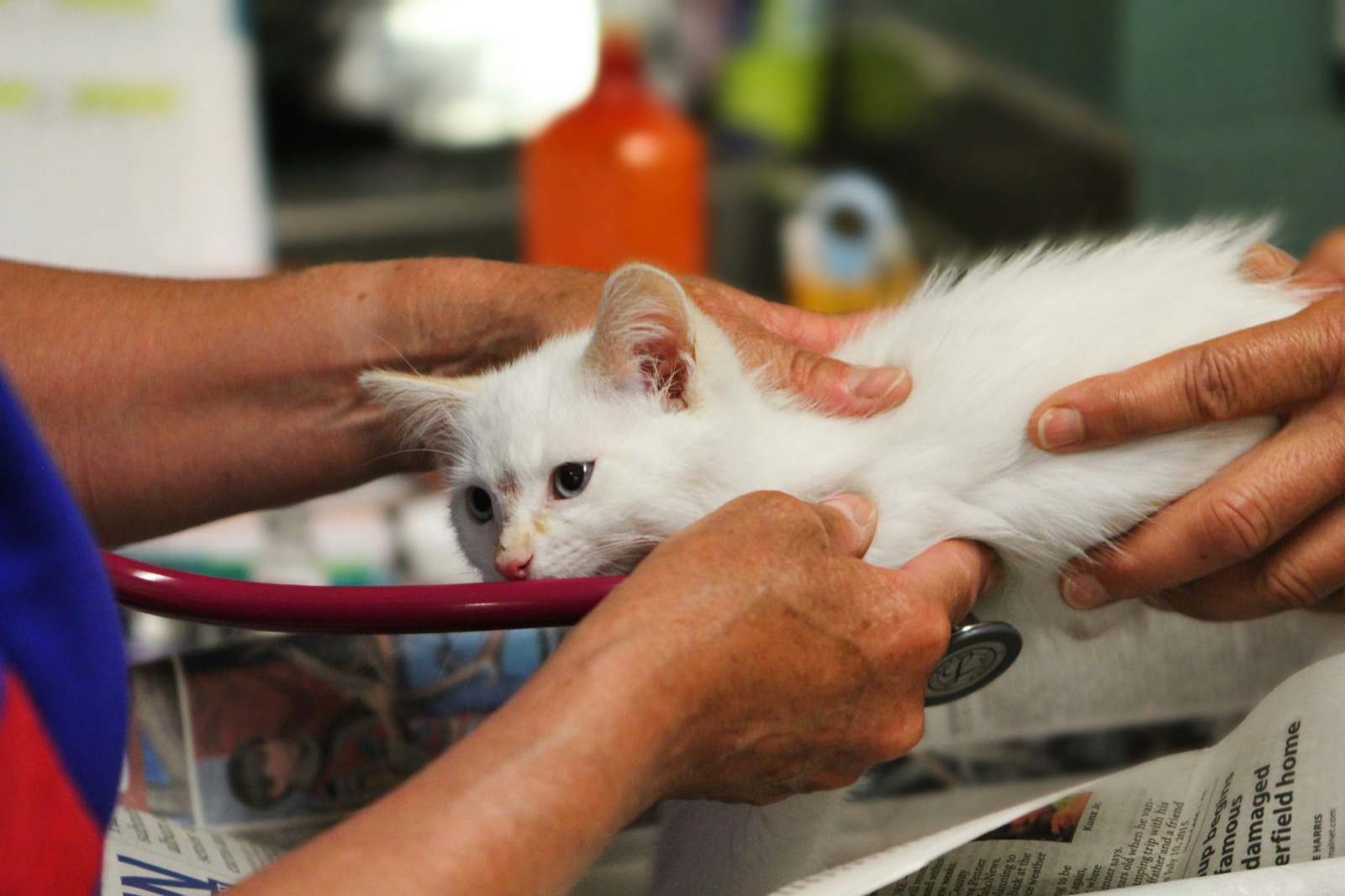
What happens during a first vet visit?
A standard wellness exam typically includes:
- Weight and vital signs (temperature, heart rate, respiratory rate)
- A head-to-tail physical: eyes, ears, mouth and teeth, lymph nodes, skin and coat, abdomen, joints
- A review of your pet's diet, exercise habits, and any behavioral changes you've noticed
- Vaccination review and any boosters due
- Parasite prevention discussion (flea, tick, heartworm)
Ask the vet to explain what they're doing, if you're uncertain. There's no benefit to being shy.
For kittens, the first visit will also typically include blood tests for feline leukemia (FeLV) and FIV, especially important for cats who came from a shelter or had outdoor exposure. These are treatable or manageable conditions, if they're caught.
What vaccines does a puppy or kitten need?
Vaccines fall into two categories:
Core vaccines — recommended for every dog or cat regardless of lifestyle:
- Dogs: DA2PP or DHPP (covers distemper, adenovirus/hepatitis, parvovirus, and parainfluenza in a single shot). These diseases are serious: parvovirus is highly contagious with no cure, and distemper is often fatal. Rabies is also core and legally required in most U.S. states.
- Cats: FVRCP (feline viral rhinotracheitis, calicivirus, panleukopenia — sometimes called "feline distemper") and rabies.
Non-core (lifestyle) vaccines — recommended based on your pet's individual risk factors:
- Dogs: Bordetella (kennel cough, required by most boarding facilities), Leptospirosis (a bacterial disease transmissible to humans — worth taking seriously if your dog has access to outdoor water sources or wildlife), Lyme disease (tick-endemic areas), Canine Influenza (boarding/dog park exposure).
- Cats: FeLV (feline leukemia) is core for kittens and cats with outdoor access.
Expect a conversation about which non-core vaccines apply to your pet. Your vet will ask about your pet's lifestyle, environment, and any planned boarding or travel. Come prepared to answer those questions.
Other topics that might come up at a first visit
- Spay or neuter timing. Your vet will almost certainly raise this at the first or second visit. Recommendations have evolved and now vary by species, breed, and size — don't assume the answer is always "6 months." Ask for their specific recommendation and the reasoning behind it.
- Microchipping. If your pet isn't already microchipped, this is a common first-visit discussion. Even indoor-only cats should be microchipped, because indoor cats can sometimes get themselves outdoors. Microchipping is inexpensive and one of the most effective ways to reunite lost pets with their owners. The day could come when you're grateful you made the investment.
- Diet. How much to feed, what kind of food, and how often. Vets often skip this unless asked, but it's worth raising.
Activity restrictions during the vaccine series
Until the vaccine series is complete (typically around 16 weeks), puppies are at higher risk from unvaccinated dogs and contaminated environments. A rough guide:
- Avoid: Dog parks, pet store floors, areas frequented by unknown dogs, puddles and standing water in high-traffic areas.
- Generally fine: Socialization with dogs you know to be vaccinated and healthy, properly run puppy classes in clean indoor environments, carrying your puppy in public areas (not letting them walk on ground others use).
- Important: The socialization window closes around 12–14 weeks. Waiting until full vaccination to introduce your puppy to the world has its own costs. Your vet can help you weigh the risk of disease vs. the cost of missed socialization — this is worth discussing explicitly.
The conversation that matters
The physical exam is fairly routine. What varies significantly between practices is the conversation around it. A good vet will:
- Explain any findings clearly, including what's normal and what to watch
- Give you context for any recommended tests or treatments, not just a list of them
- Tell you roughly what something will cost before proceeding
- Ask whether you have questions rather than assuming you don't
If the vet recommends diagnostics or treatments, it's completely appropriate to ask: "What would happen if we waited on that?" or "Is there a less expensive option that would give us similar information?" A good vet will engage with these questions honestly.
Questions to ask before you leave
Bring this list, or write your own version:
- "What vaccines did my pet receive today, and when is the next round due?"
- "Which non-core vaccines do you recommend for our lifestyle, and why?"
- "What should I watch for at home after today's vaccines?" (Mild soreness and lethargy for 24 hours is normal; facial swelling, vomiting, or difficulty breathing are reasons to call immediately.)
- "Is my pet at a healthy weight?"
- "What do you recommend feeding, and how much?"
- "What's your after-hours or emergency protocol?" — Ask this now, before you need it.
- "When should we discuss spay/neuter?"
- "What signs between now and the next visit should prompt me to call?"
How much does a first vet visit cost?
A first puppy or kitten visit typically costs $150–$300, including the wellness exam, the first round of core vaccines, and a fecal test — though prices vary significantly by region and practice type. Urban markets and specialty clinics are higher; low-cost clinics (often offered by humane societies or nonprofits) can be substantially lower for basic vaccines. Ask the practice for a cost estimate when you book — any reputable practice will give you one.
For a written breakdown of what vet bill line items typically mean, see our article Understanding Your Vet Bill.
After the visit
You should get written visit summary before you leave, including what was given, any findings, and next steps. Most practices send one automatically or can email it. Note any post-vaccination instructions and when the next appointment should be booked.
Also make a note of how you felt on the way out. Did the vet seem engaged? Did they listen without rushing? Did you leave understanding what happened and what comes next? You're making a long-term relationship decision, not a one-time transaction.
Find a vet with a track record of clear communication
VetFairly reviews include structured detail on how vets communicate, handle anxious pets, and explain costs — the things that matter most on a first visit.
Find a Vet Near You